

 Residential Energy Storage Solutions
 Commercial & Industrial BESS Solutions
 Residential Energy Storage System
 Commercial & Industrial BESS
 Residential Inverter
 Deep Cycle LiFePO4 Battery


 Datasheet
 Warranty
 FAQ
FAQ Videos
 Technical Support
 Contact Us
 News
News Webinars
 Events
Why Modular BESS Is Ideal for C&I Projects?
As commercial and industrial energy users face rising electricity costs, unstable grid conditions, and growing demand for renewable energy integration, battery energy storage systems are becoming an important part of modern energy infrastructure.
For EPC companies, however, choosing the right BESS solution is not only about battery capacity. It is also about project flexibility, installation efficiency, long-term scalability, and system reliability.
This is why the modular BESS system is becoming an ideal solution for C&I projects. Compared with fixed-capacity energy storage systems, modular BESS allows EPCs to design systems based on real site needs, expand capacity when required, and reduce unnecessary engineering complexity.
1. What Is a Modular BESS System?
A modular BESS system is a battery energy storage solution built with standardized battery modules, cabinets, or system units. These units can be combined to create different system capacities for different commercial and industrial applications.
Instead of using one fixed system size for every project, EPCs can configure the system based on the customer’s load profile, peak demand, backup power requirement, solar PV capacity, and available installation space.
In practical C&I projects, this flexibility is very important. A small commercial site may only need a compact ESS for peak shaving and backup power, while a factory, logistics center, or EV charging station may require a larger scalable battery system. Modular design allows both project types to be supported with the same system logic.
2. Why Modular BESS Matters for EPC Projects
C&I energy storage projects are rarely the same. Each site has different electricity consumption patterns, tariff structures, grid limitations, and business priorities. For EPCs, this means the energy storage system must be flexible enough to match different project conditions.
A modular BESS system helps EPCs avoid over-designing or under-designing the system. Capacity can be selected according to actual demand instead of forcing the customer to accept a fixed configuration. This makes project proposals more accurate and easier for customers to understand.
For example, if the customer’s main goal is demand charge reduction, the EPC can size the system around peak load patterns. If the customer needs backup power, the system can be designed around critical load and backup duration. If the customer plans to add solar or EV chargers later, the battery capacity can be expanded in future phases.
This makes modular BESS especially valuable for EPCs that need to deliver customized but repeatable solutions across multiple C&I projects.
3. Scalable Battery Capacity Reduces Project Risk
One of the biggest advantages of a modular BESS system is scalability.
In many C&I projects, customers may not want to invest in a large energy storage system at the beginning. Their current energy demand may be moderate, but future expansion could increase the need for battery capacity. A modular system allows the project to start with a suitable capacity and expand later when business needs grow.
This phased approach helps reduce upfront investment pressure while protecting the customer’s long-term energy strategy.
For EPCs, scalable battery design also reduces project risk. The system can be matched more closely to actual operating data, and future upgrades can be planned without replacing the original system. This is especially useful for commercial buildings, factories, gas stations, EV charging sites, and solar-plus-storage projects where energy demand may change over time.
4. Easier Installation and Faster Deployment
Modular BESS also brings clear advantages during project execution.
Because the system is based on standardized modules or cabinets, EPCs can simplify transportation, site layout, installation, and commissioning. A repeatable system structure helps reduce engineering time and makes it easier to manage multiple projects.
For C&I customers, faster deployment means less disruption to business operations. For EPCs, it means lower installation uncertainty and better project control.
This is particularly important in markets where energy storage projects need to move quickly due to incentive timelines, utility requirements, or customer cost-saving targets. A modular BESS system allows EPC teams to work with a more predictable design, which can improve both delivery efficiency and project profitability.
5. Better Long-Term Maintenance and Operation
C&I energy storage is a long-term investment. Customers care not only about installation cost, but also about system performance over time.
A modular BESS system can make maintenance more efficient because the system is divided into manageable units. If a component needs inspection or service, technicians can identify the affected section more easily. This helps reduce downtime and improves long-term system availability.
When combined with remote monitoring and intelligent energy management, modular BESS can also give EPCs and operators better visibility into battery status, charge and discharge behavior, alarms, and system performance. This supports faster troubleshooting and better after-sales service.
For EPC companies, strong operation and maintenance capability can become an important competitive advantage, especially for long-term customers and multi-site projects.
6. Ideal Applications for Modular C&I Energy Storage
Modular BESS systems are suitable for a wide range of commercial and industrial energy storage applications.
In peak shaving projects, the system can discharge during high-demand periods to reduce maximum grid demand. In solar-plus-storage projects, it can store excess solar energy and improve self-consumption. In backup power applications, battery capacity can be designed according to critical load requirements. For EV charging stations, modular BESS can help reduce grid pressure and support higher charging demand.
The same system concept can also be used in microgrids, remote sites, and VPP-ready energy storage projects. This flexibility makes modular BESS a practical solution for EPCs working across different industries and customer scenarios.
7. Kowint Energy Modular BESS Solutions for C&I Projects
Kowint Energy provides scalable battery energy storage solutions for commercial and industrial applications, helping EPCs, installers, and project developers deliver more flexible energy storage projects.
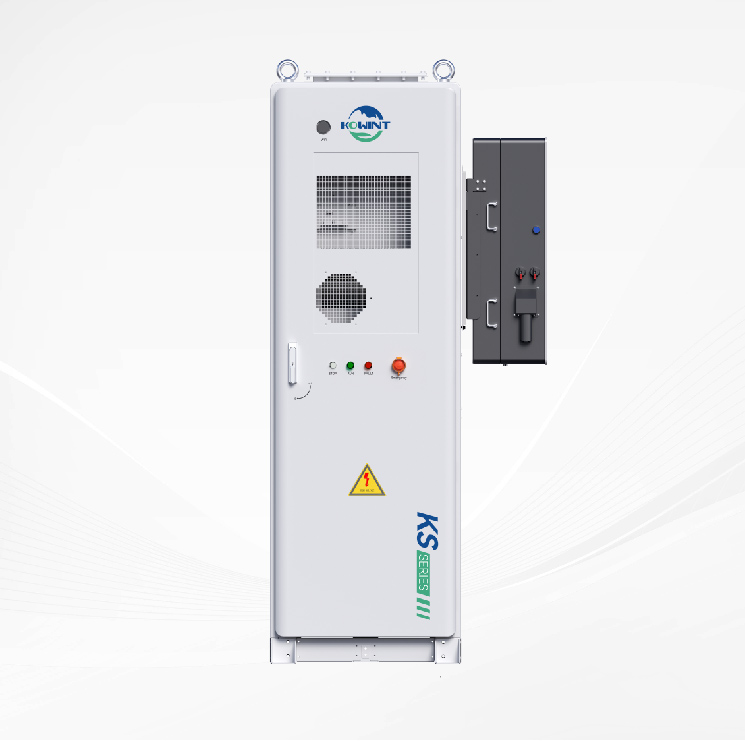
For small and medium C&I projects, the KS-60A air-cooled ESS offers a compact solution for peak shaving, backup power, solar self-consumption, and commercial energy management.
For larger C&I projects, the KS-233A liquid-cooled ESSintegrates battery storage, PCS, thermal management, fire protection, and intelligent system control. It is designed for applications such as demand charge reduction, microgrids, VPP participation, and large commercial energy storage projects.
With modular system design, smart monitoring, and scalable configuration, Kowint Energy helps EPC customers reduce project complexity and build energy storage systems that are ready for both current and future energy needs.
About Kowint Energy
Kowint Energy is a battery energy storage system provider focused on residential, commercial, and industrial energy storage solutions. With a product portfolio covering rack-mounted batteries, stackable residential batteries, air-cooled C&I ESS, and liquid-cooled commercial battery energy storage systems, Kowint Energy supports EPCs, installers, distributors, and project developers with reliable, scalable, and intelligent energy storage solutions for global markets.
www.kowint.com | info@kowint.com