

 Residential Energy Storage Solutions
 Commercial & Industrial BESS Solutions
 Residential Energy Storage System
 Commercial & Industrial BESS
 Residential Inverter
 Deep Cycle LiFePO4 Battery


 Datasheet
 Warranty
 FAQ
FAQ Videos
 Technical Support
 Contact Us
 News
News Webinars
 Events
Peak Shaving with BESS: A Complete Guide
For many commercial and industrial facilities, electricity costs are not only determined by how much energy is consumed, but also by when and how quickly that energy is used. Short periods of high power demand can create costly peaks, especially for businesses operating under demand-based utility tariffs.
This is where peak shaving energy storage becomes valuable. By using a battery energy storage system (BESS) to discharge during high-demand periods, businesses can reduce the maximum power drawn from the grid and lower demand-related electricity costs.
This article explains how peak shaving works, why BESS is well suited for this application, and what factors influence real-world performance.
What Is Peak Shaving?
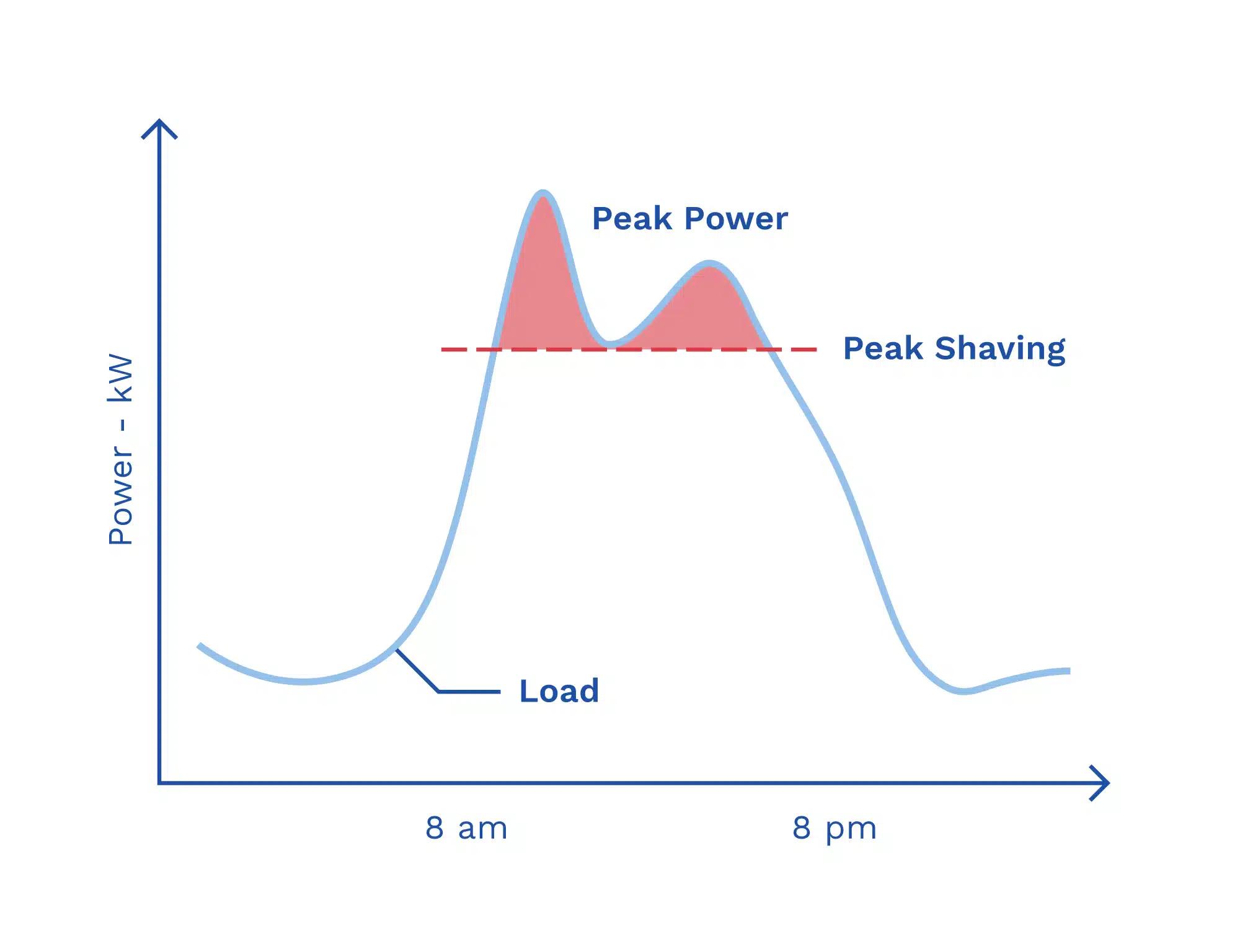
Peak shaving is the process of reducing the highest level of power demand recorded by a facility. Instead of allowing all equipment loads to be supplied by the grid during peak periods, part of the load is supplied by a battery system.
For example, if a facility reaches a peak demand of 500 kW and the BESS discharges 150 kW at that moment, the grid may only record 350 kW of demand. This reduction can directly lower demand charges, depending on the utility tariff.
Peak shaving is especially useful for facilities with short but expensive demand spikes, such as equipment startup, HVAC operation, refrigeration loads, or EV charging activity.
How BESS Enables Peak Shaving
An industrial BESS works by charging when demand is lower and discharging when facility demand rises. The goal is not simply to use stored energy, but to use it at the right time.
During normal or off-peak periods, the battery stores energy from the grid or from on-site generation such as solar PV. When facility load approaches a target demand threshold, the BESS discharges to offset part of the load. This helps keep grid demand below a predefined level.
The effectiveness of peak shaving depends heavily on control strategy. A well-designed BESS uses an energy management system to monitor real-time load, identify peak events, and dispatch the battery quickly enough to reduce the measured peak demand.
Why Peak Shaving Matters for Businesses
Peak shaving matters because demand charges can represent a large portion of commercial electricity bills. Even if total energy consumption remains the same, reducing peak demand can lower monthly costs and make energy expenses more predictable.
For businesses with frequent load spikes, peak shaving can also improve operational flexibility. Instead of limiting equipment usage or manually controlling loads, the facility can use battery storage as an automated buffer between operations and the grid.
In many commercial BESS projects, peak shaving becomes one of the most important contributors to project ROI, especially in regions with high demand charges.
What Affects Peak Shaving Performance?
The performance of a peak shaving system depends on the relationship between site load, battery power, battery capacity, and utility tariff structure.
Power rating is particularly important. Since peak shaving is about reducing kW demand, the BESS must have enough discharge power to offset meaningful load spikes. Capacity also matters because the system must sustain discharge long enough to cover the full peak interval.
The site’s load profile is another key factor. Facilities with sharp, irregular peaks often have stronger savings potential than facilities with flat and stable loads. Utility billing rules also matter, especially whether demand is measured over 15-minute or 30-minute intervals.
Finally, control accuracy determines whether the battery responds at the right moment. If the system discharges too early or too late, it may miss the actual billing peak and reduce savings.
Where Peak Shaving Is Commonly Used
Peak shaving with BESS is commonly used in manufacturing facilities, commercial buildings, supermarkets, warehouses, logistics centers, and EV charging sites. These applications often have fluctuating demand patterns and equipment-driven peaks.
For these businesses, BESS can support daily energy management while reducing the impact of peak demand on electricity costs.
About Kowint Energy
Kowint Energy provides industrial BESS solutions designed to support peak shaving, load management, and energy cost optimization for commercial and industrial applications
www.kowint.com | info@kowint.com