

 Residential Energy Storage Solutions
 Commercial & Industrial BESS Solutions
 Residential Energy Storage System
 Commercial & Industrial BESS
 Residential Inverter
 Deep Cycle LiFePO4 Battery


 Datasheet
 Warranty
 FAQ
FAQ Videos
 Technical Support
 Contact Us
 News
News Webinars
 Events
BESS for Gas Stations: ROI & Benefits of Battery Storage
Gas stations are no longer simple fuel retail sites. Many locations now operate convenience stores, refrigeration equipment, lighting systems, HVAC, car wash facilities, security systems, and in some cases EV charging stations. As a result, electricity demand can be high, uneven, and costly.
For gas station owners and operators, energy cost control and power reliability are becoming more important than ever. This is where battery storage for gas stations can create measurable value.
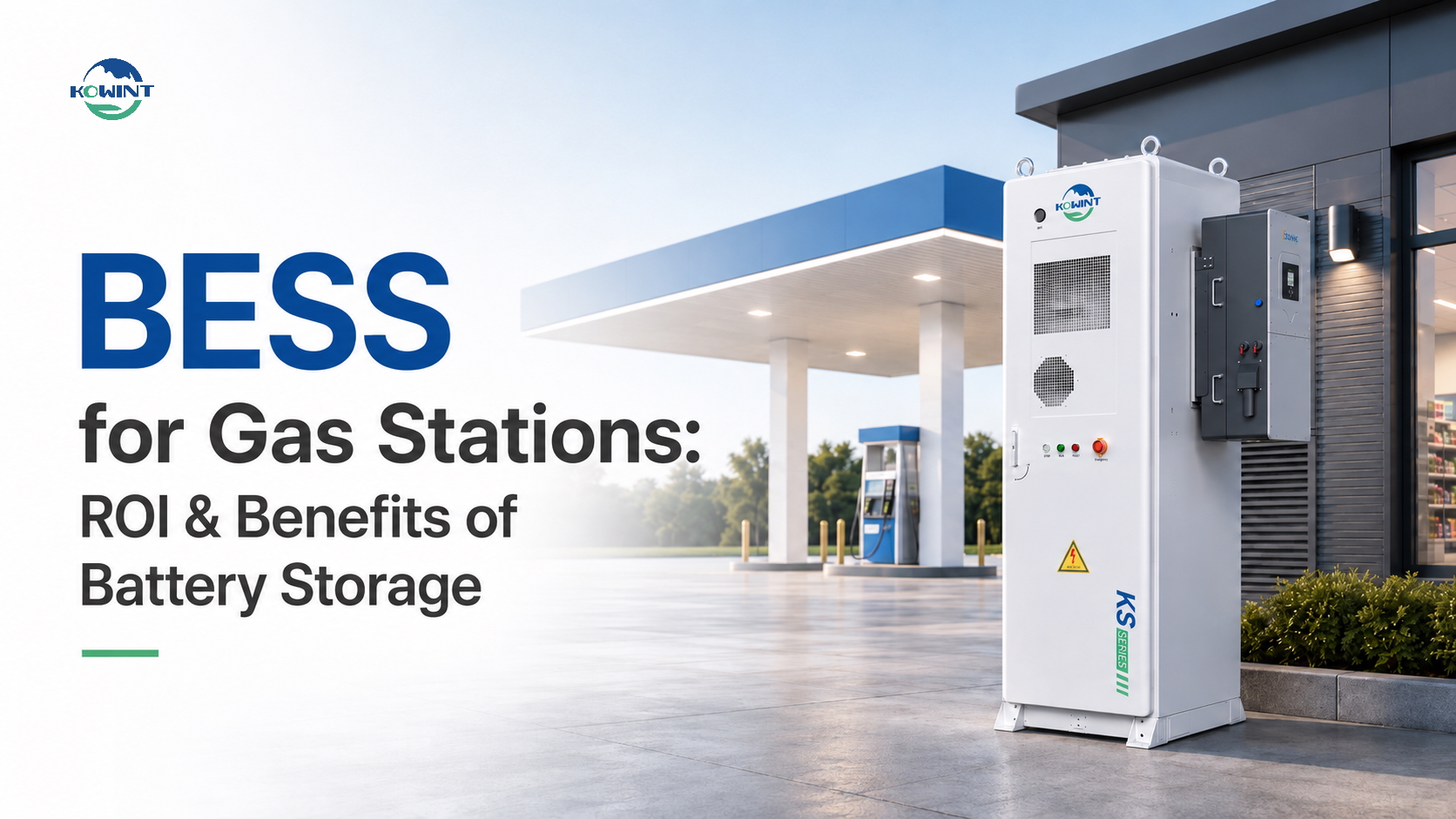
A commercial BESS, or battery energy storage system, can help gas stations reduce peak demand, improve backup power capability, support solar energy use, and prepare for future EV charging expansion.
1. Why Gas Stations Need Battery Energy Storage
Gas stations often have a unique energy profile. Their power usage can rise quickly during busy hours when pumps, lighting, HVAC, refrigeration, and in-store equipment operate at the same time. If EV chargers or car wash systems are added, peak power demand can increase even further.
These peak periods may lead to higher utility bills, especially in regions where demand charges are applied. A commercial BESS can store energy during lower-cost or lower-demand periods and discharge during peak demand periods.
For many gas station projects, battery storage is not only about backup power. It is also a practical tool for reducing operating costs and improving site resilience.
2. How BESS Works for Gas Stations
A battery energy storage system is usually installed on-site and connected to the gas station’s electrical system. The system can charge from the grid, from solar PV, or from both sources depending on the project design.
During periods of high electricity demand, the BESS discharges stored energy to reduce the amount of power drawn from the grid. This helps smooth the site’s load profile and reduce peak demand.
For gas stations, BESS can support several key functions:
1. Peak shaving during high-load hours
2. Backup power for critical loads
3. Solar energy self-consumption
4. EV charging load support
5. Energy cost optimization
6. Power quality and operational resilience
This makes commercial BESS especially valuable for gas stations that operate long hours or serve as essential community infrastructure.
3. Key Benefits of Battery Storage for Gas Stations
3.1 Reduce Demand Charges
One of the biggest benefits of battery storage for gas stations is peak shaving.
Many commercial electricity bills include demand charges based on the highest level of power drawn during a billing period. Even a short spike in demand can increase monthly costs.
A commercial BESS can discharge during these high-demand moments and reduce the peak load seen by the utility meter. For gas stations with refrigeration, HVAC, lighting, pumps, or EV chargers, this can help lower electricity costs over time.
3.2 Improve Backup Power for Critical Operations
Power outages can directly affect gas station revenue and customer trust. If pumps, POS systems, lighting, refrigeration, or security systems go offline, the site may be unable to continue normal operations.
Battery storage can provide backup power for selected critical loads. Compared with traditional backup solutions, a BESS can respond quickly, operate quietly, and integrate with solar PV or the grid.
For gas stations located in areas with unstable grid conditions, storms, or high outage risk, backup capability can be a strong reason to consider commercial BESS.
3.3 Support EV Charging Expansion
As more gas stations add EV chargers, site power demand can become more challenging. Fast charging stations can create high power spikes, which may increase demand charges or require expensive grid upgrades.
Battery storage can help buffer EV charging loads by supplying part of the required power during charging peaks. This can make EV charger deployment more flexible and may help reduce the pressure on existing grid capacity.
For gas stations planning to become multi-energy service stations, BESS can be an important part of the future infrastructure.
3.4 Increase Solar PV Self-Consumption
Many gas stations have available roof space, canopy space, or nearby land that can support solar PV installation. However, solar generation does not always match the station’s actual load profile.
With battery storage, excess solar energy can be stored and used later during evening hours or peak demand periods. This improves solar self-consumption and can increase the overall value of a PV system.
For gas station operators, PV plus BESS can create a more stable and cost-efficient energy strategy.
3.5 Improve Energy Resilience and Business Continuity
Gas stations often serve as essential service points during emergencies. Reliable power is especially important for locations near highways, logistics routes, rural communities, or disaster-prone regions.
A commercial BESS can help gas stations maintain essential operations when grid power is unstable. Depending on system size and load design, it can support pumps, payment systems, lighting, refrigeration, communications, and security equipment.
This can help improve business continuity and strengthen the site’s value to local customers.
4. ROI Factors for Gas Station BESS Projects
The ROI of a BESS for gas stations depends on several project-specific factors. There is no single payback period that applies to every site, because utility rates, load profiles, system size, and usage strategy vary by location.
However, the main ROI drivers usually include:
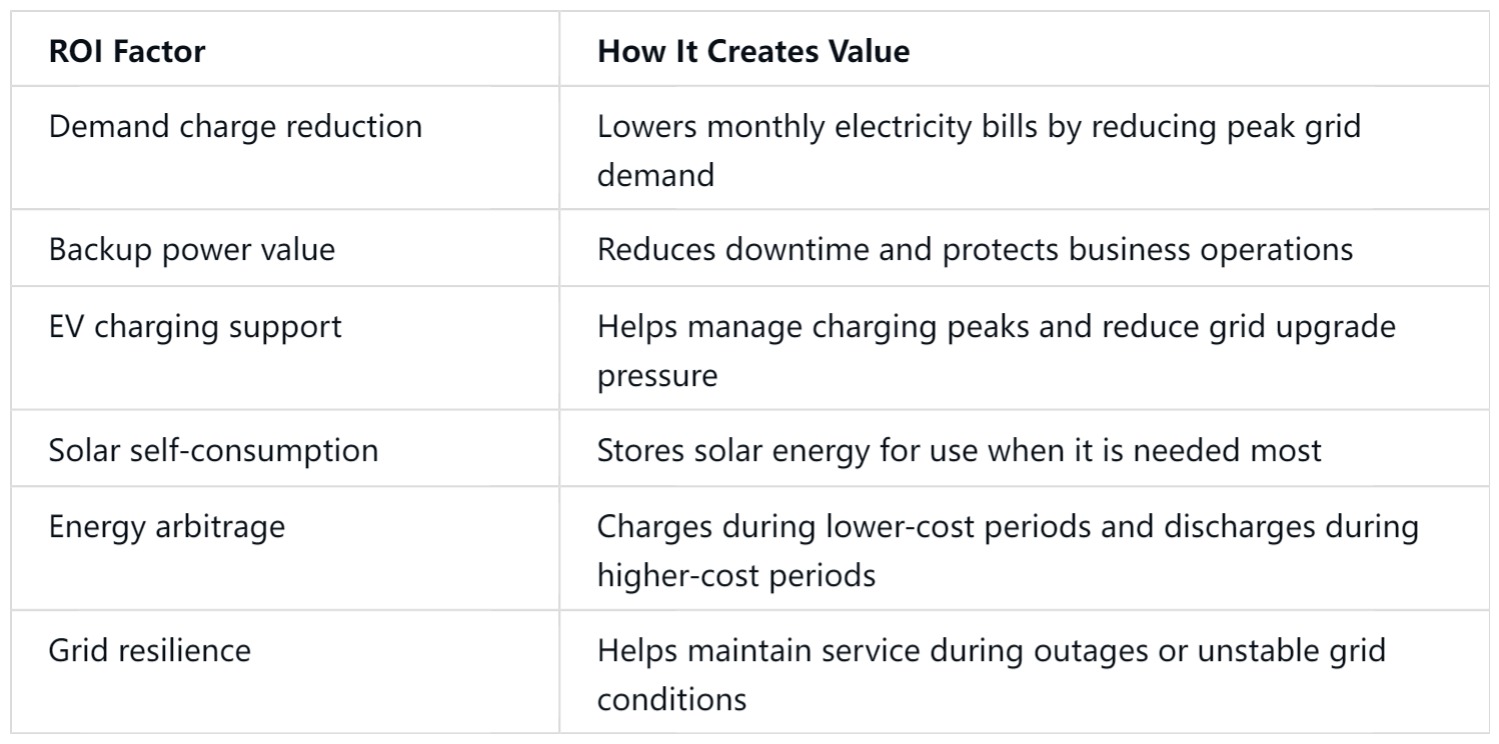
For the best ROI analysis, gas station owners should review at least 12 months of utility bills and site load data. This helps identify demand peaks, seasonal trends, backup requirements, and the right battery capacity.
5. What Size BESS Does a Gas Station Need?
The right system size depends on the site’s energy goals.
For smaller gas stations focused mainly on peak shaving and limited backup power, a medium-sized commercial ESS may be enough. For larger sites with car wash systems, EV chargers, solar PV, or longer backup requirements, a larger battery system may be needed.
Common sizing considerations include:
- Daily electricity consumption
- Peak demand level
- Demand charge structure
- Critical backup loads
- Backup duration requirement
- Solar PV capacity
- EV charger power rating
- Available installation space
- Local interconnection requirements
For example, a gas station may choose a compact commercial BESS for peak shaving, while a larger highway service station may require a higher-capacity system to support EV charging and extended backup power.
6. Commercial BESS Applications for Gas Stations
Battery storage can be used in different types of gas station projects, including:
- Urban gas stations with high electricity rates
- Highway service stations with EV charging
- Gas stations with convenience stores and refrigeration loads
- Sites with car wash facilities
- Solar plus storage gas station projects
- Locations with frequent power outages
- Remote or weak-grid service stations
This flexibility makes commercial BESS suitable for both new energy infrastructure projects and retrofit upgrades.
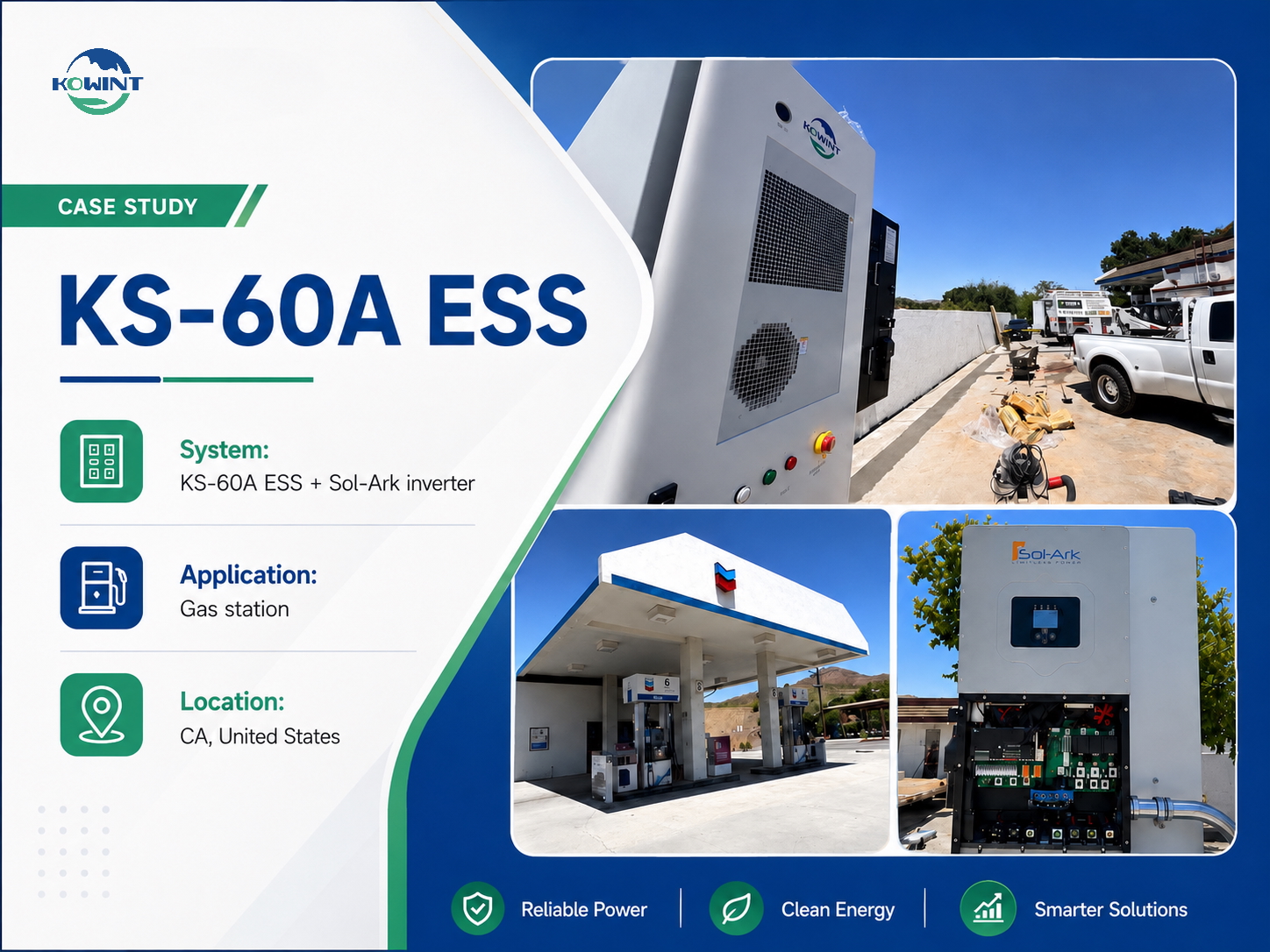
7. Why Choose Kowint Energy for Gas Station BESS Projects
Kowint Energy provides commercial and industrial energy storage solutions designed for real project applications, including peak shaving, backup power, solar integration, and microgrid support.
For gas station projects, Kowint Energy can support different system configurations depending on the site’s load profile and ROI target.
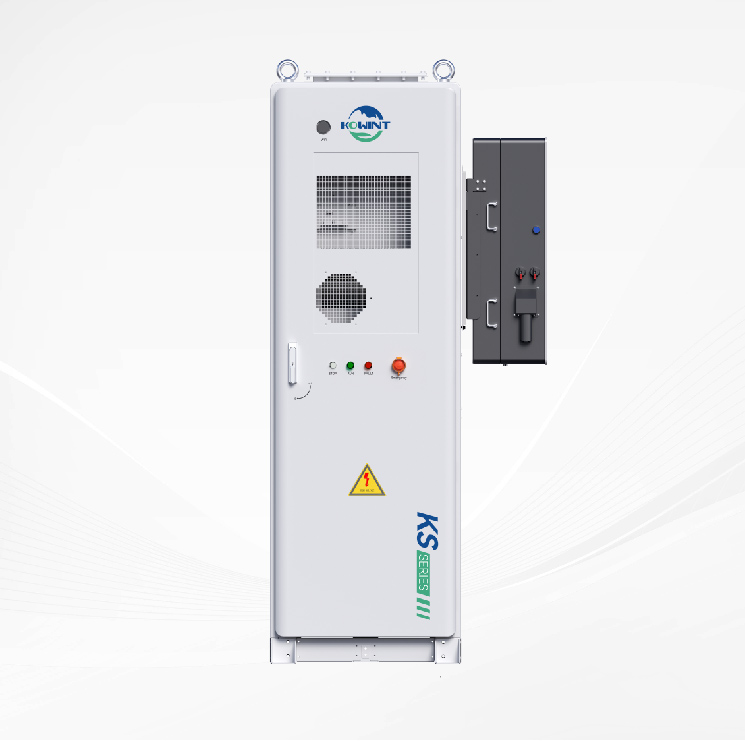
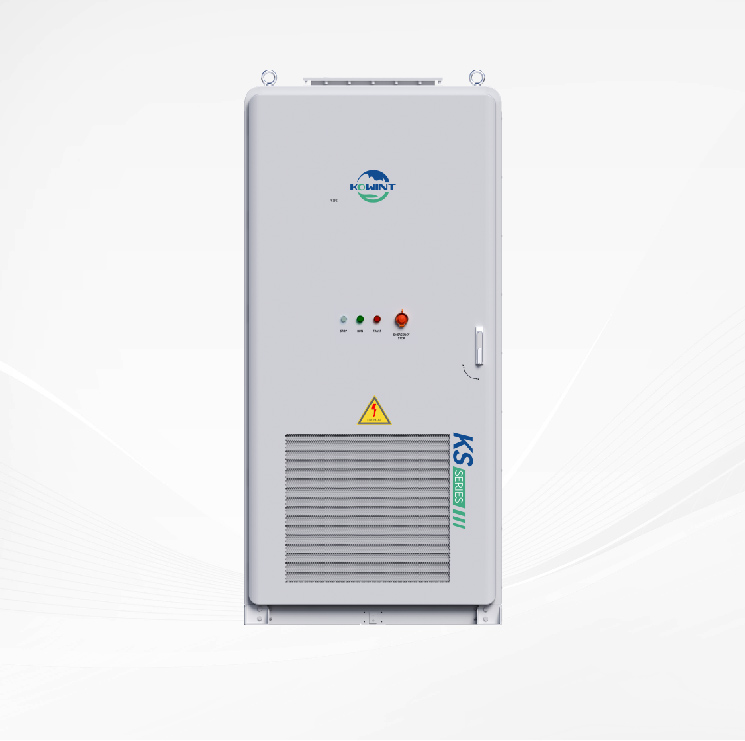
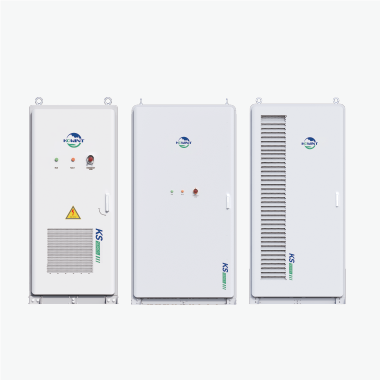
- KS-60A Air-Cooled ESS is suitable for small and medium-sized commercial applications where flexible deployment and practical capacity are required.
- KS-233A Liquid-Cooled ESS is designed for larger commercial and industrial projects that require higher capacity, integrated PCS, and stronger energy management capability.
With remote monitoring, smart BMS, scalable architecture, and project-based configuration support, Kowint Energy helps gas station operators turn energy storage into a practical cost-saving and resilience solution.
8. Conclusion: Battery Storage Helps Gas Stations Reduce Costs and Stay Operational
Gas stations are facing higher electricity demand, more complex energy usage, and increasing pressure to improve operational resilience. A commercial BESS can help address these challenges by reducing peak demand, supporting backup power, improving solar energy utilization, and enabling EV charging expansion.
For gas station owners, battery storage is not just an equipment upgrade. It is a long-term energy strategy that can improve cost control, reliability, and future readiness.
About Kowint Energy
Kowint Energy provides residential, commercial, and industrial energy storage solutions for global markets. Our product portfolio includes stackable residential batteries, rack-mounted battery systems, air-cooled commercial ESS, and liquid-cooled C&I energy storage systems. With smart monitoring, reliable battery technology, and flexible system design, Kowint Energy supports partners in building safer, more efficient, and more resilient energy projects.
www.kowint.com | info@kowint.com