

 Residential Energy Storage Solutions
 Commercial & Industrial BESS Solutions
 Residential Energy Storage System
 Commercial & Industrial BESS
 Residential Inverter
 Deep Cycle LiFePO4 Battery


 Datasheet
 Warranty
 FAQ
FAQ Videos
 Technical Support
 Contact Us
 News
News Webinars
 Events
How Supermarkets Use BESS to Cut Costs
Supermarkets are among the most energy-intensive commercial facilities. Unlike many other retail businesses, supermarkets operate continuously with refrigeration systems, lighting, HVAC, checkout equipment, security systems, and other electrical loads running throughout the day.
With rising electricity costs and increasing pressure to improve operational efficiency, many supermarket operators are exploring battery storage for supermarkets as a practical energy management solution.
A commercial BESS (Battery Energy Storage System) allows supermarkets to store electricity and use it strategically when energy costs are higher or when additional power support is needed. By improving energy control, BESS can help supermarkets reduce operating expenses, strengthen power reliability, and create a more sustainable energy strategy.
1. Why Energy Costs Are a Major Challenge for Supermarkets
Electricity is one of the largest operating expenses for supermarkets, mainly due to refrigeration and cooling systems. These systems must operate continuously to maintain food quality and comply with safety requirements, creating a stable but significant energy demand.
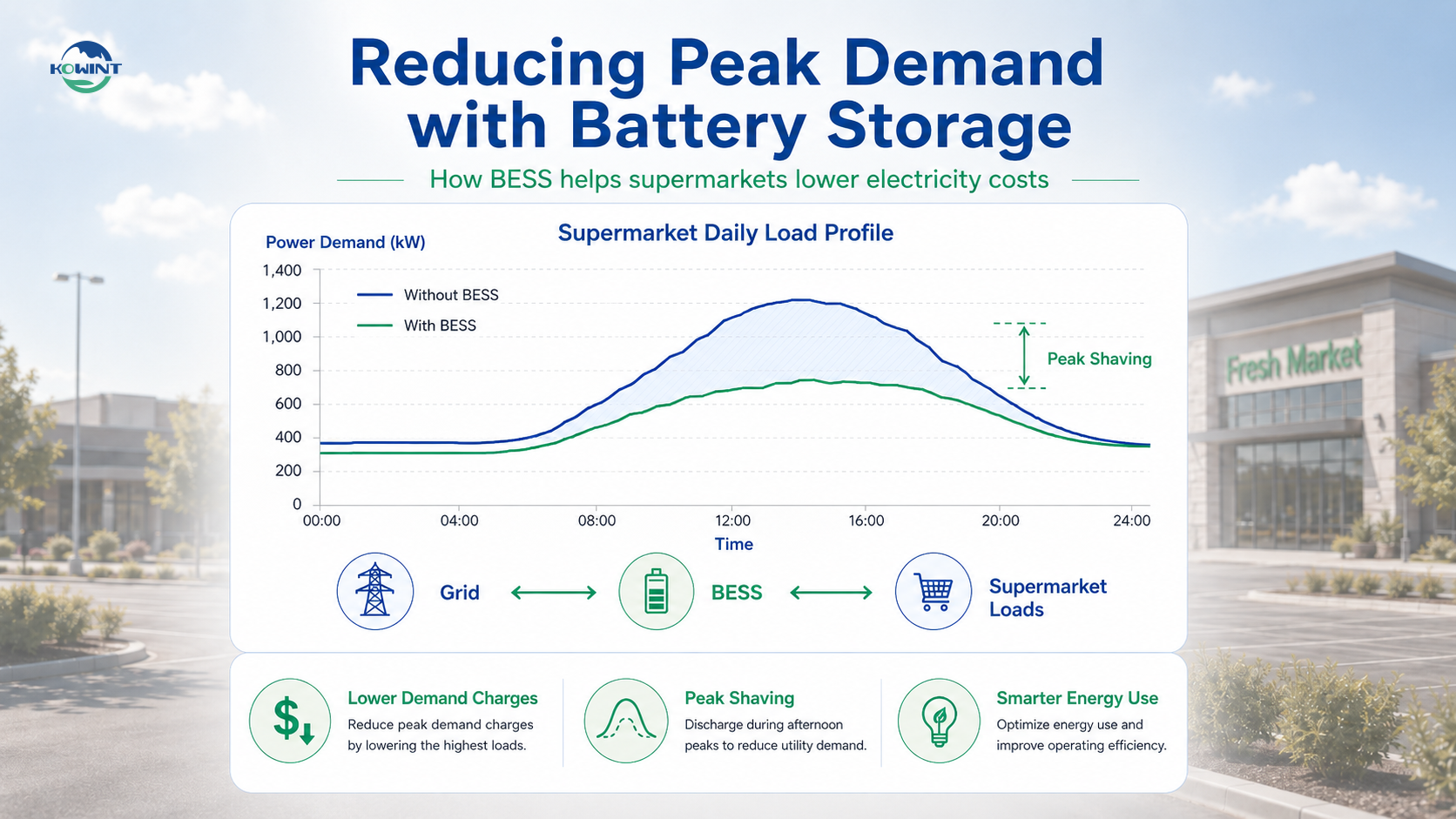
At the same time, supermarket electricity consumption often increases during peak business hours when refrigeration, lighting, HVAC, and customer activity are all operating simultaneously. In many regions, utilities apply demand charges based on the highest power consumption recorded during a billing period, making short-term demand spikes expensive.
This is where energy cost reduction becomes an important goal. By integrating a commercial BESS, supermarkets can better manage when electricity is consumed and reduce the impact of peak demand periods.
2. How Battery Storage Helps Supermarkets Reduce Energy Costs
A BESS works by storing energy during lower-demand or lower-cost periods and supplying power when demand increases. This allows supermarkets to shift part of their energy consumption away from expensive peak periods.
One of the most common applications is peak shaving. During high-demand hours, the battery system can discharge stored energy to support the supermarket’s electrical loads, reducing the amount of power drawn from the grid.
For supermarkets with high refrigeration loads, HVAC systems, or extended operating hours, this approach can help create a more balanced energy profile and improve long-term electricity cost management.
Unlike traditional energy-saving measures that focus only on reducing consumption, BESS provides supermarkets with greater flexibility in controlling when and how energy is used.
3. Supporting Refrigeration, Backup Power, and Business Continuity
Reliable power is critical for supermarkets. Refrigeration systems, freezers, payment systems, lighting, and security equipment all depend on stable electricity. A power interruption can lead to product losses, operational disruptions, and customer inconvenience.
A commercial BESS can provide backup power support for critical supermarket loads during grid outages or unstable power conditions. Depending on the system design, stored energy can help maintain essential operations until grid power is restored or other backup sources are activated.
For supermarkets located in areas affected by extreme weather, grid instability, or frequent outages, battery storage provides an additional layer of energy resilience and helps protect business continuity.
4. Combining Solar PV and Battery Storage for Supermarkets
Many supermarkets have large rooftop areas that are suitable for solar PV installation. However, solar generation does not always match the supermarket’s energy demand.
During periods of strong sunlight, solar panels may produce more electricity than the store immediately requires. Without energy storage, excess solar power may have limited value depending on local electricity policies and grid conditions.
By combining solar PV with battery storage, supermarkets can store excess solar energy and use it later during higher-demand periods. This improves solar self-consumption and allows renewable energy to contribute more effectively to daily operations.
For supermarket chains looking to reduce energy costs while improving sustainability performance, PV plus BESS can become an important part of their long-term energy strategy.
5. Why More Supermarkets Are Investing in Commercial BESS
The value of a supermarket BESS project depends on factors such as electricity rates, demand charge structure, operating schedule, refrigeration requirements, and backup power needs.
A well-designed system can provide multiple benefits at the same time, including demand reduction, energy optimization, backup capability, and improved renewable energy utilization.
For supermarket operators, battery storage is not simply an additional power source. It is an energy management tool that helps control costs and improve operational flexibility.
As electricity prices continue to change and commercial businesses place more focus on energy efficiency, battery storage for supermarkets is becoming an increasingly practical solution for modern retail facilities.
6. Choosing the Right BESS Solution for Supermarket Applications
Supermarkets face unique energy challenges due to continuous operation, refrigeration requirements, and high electricity demand. By deploying a commercial BESS, supermarket operators can reduce peak demand, improve energy management, support renewable energy integration, and strengthen operational resilience.
As businesses continue to search for practical ways to achieve energy cost reduction, battery storage will play an increasingly important role in the future of commercial energy management.
About Kowint Energy
Kowint Energy provides residential, commercial, and industrial energy storage solutions for global markets. Our product portfolio includes stackable residential batteries, rack-mounted battery systems, air-cooled commercial ESS, and liquid-cooled C&I energy storage systems. With smart monitoring, reliable battery technology, and flexible system design, Kowint Energy supports partners in building safer, more efficient, and more resilient energy projects.
www.kowint.com | info@kowint.com